Local AI · private mesh · open protocol

Knowledge should
belong to everyone.
Intelligence should
serve no one.

iors is a local AI layer for people and organizations. It starts with the hardware you already own: phone, laptop, mini-PC, or an old computer. It runs locally, uses a knowledge graph, cache routing, and on-device generation — using the cloud only as a controlled fallback.

4B
people priced out of cloud AI
18 / 28
live / peak nodes in the current fleet
1M+
graph · cache · routing · generation events
DOI
published research + OpenAI-compatible API
Two people working with phone and laptop in a warm local interior
local-first · no account
iors local chat
"Can I get a lesson plan without internet?"
Yes. I check the knowledge graph first, then cache, then a nearby worker.
local 8B · graph/cache route · private ready
01 / Diagnosis

Every day we give AI
more than just questions.

This is not an argument about chatbots. It is an argument about access, memory, local knowledge, and the ability to work without someone else's infrastructure.

Today
The everyday.

Organization files, student notes, patient conversations, the daily work of a small business, and people's private questions all flow into systems they don't control.

That's convenient — as long as the card, the language, the connection, and the provider's policy keep working.

Except
The more you give them,
the less you have with you.

Knowledge, decisions, corrections, context, and the memory of your work become someone else's log, someone else's telemetry, someone else's pricing leverage.

And the devices we already have — phone, laptop, mini-PC, the old computer in the closet — remain just screens for someone else's apps.

What if
Your devices could work for you?

They can run a model, store knowledge, handle routing, share a safe cache, and return value to people instead of only to platforms.

iors is the consumer surface of this infrastructure: a simple chat for people, a private mesh for institutions.

02 / Five fault lines

Five dynamics
converging right now.

These are not coincidences. They are systems. iors answers their sum — not each one separately.

01
AI centralization
A few companies control the models, the distribution channels, the payments, and the access rules. Risk grows wherever all intelligence has to pass through a single external point.
Source: Epoch AI, "State of AI Safety 2024"
02
Enclosure of the commons
Open knowledge gets routed through paywalled interfaces, then sold back to people as a subscription. Price, card, language, and connection cut users off before the model even starts to answer.
Source: UNESCO, "Reimagining Our Futures Together", 2021
03
Surveillance and
data extraction
Queries, files, and work context get logged, stored, analyzed, and monetized. For schools, clinics, foundations, and businesses this isn't a UX detail — it's operational risk.
Source: Noyb, "AI Privacy Concerns", 2023
04
Sovereign AI for states
Institutions want to use AI, but they don't want to ship data to a foreign cloud — and can't build their own hyperscaler. They need infrastructure they can own and audit.
Source: Brookings, "Global AI Competition", 2023
05
Economic exclusion
Cloud AI assumes money, a card, fast internet, and English as the default world. In practice it leaves out the people, schools, clinics, and organizations that need help the most.
Source: GSMA, "The Mobile Economy 2024"
03 / Vision

Four things.
Yours. With you.

iors is not another wrapper around the cloud. It's an infrastructure layer: local by default, shared when it makes sense, private when it has to be.

Your files
With you. On your drives. iors maps, indexes, and shares them only with whom you allow — without uploading to the cloud.
Your AI
A local model on the hardware you already own. It works when you want it to — no subscription, no queue. The cloud is only a fallback, and only with your consent.
Your memory
AI conversation history, notes, contexts, projects — your property, forever. Exportable, portable, vendor-independent.
Free knowledge
Wikipedia, arXiv, OpenStax, Project Gutenberg, Stack Exchange, and institutions' own collections. Indexed, routed, and reused across a peer network — instead of locked inside a single provider.
04 / Interface

The chat is simple.
The answer path is explicit.

The interface looks familiar. The difference is underneath: you see the model, the mode, the sources, the cache/routing, and the moment when the system reaches for a fallback.

9:41
iors
Offline · 12 peers nearby
Explain photosynthesis to me, simply.
9:41
Photosynthesis is how plants turn sunlight into food. They take in carbon dioxide and water, use the light, and release oxygen.
↯ cache hit · 38 ms · arXiv+Wikipedia
Can you explain that in Ukrainian?
9:42
Фотосинтез — це процес, у якому рослини використовують сонячне світло, щоб виробляти їжу. Вони беруть вуглекислий газ і воду, поглинають світло й виділяють кисень.
↯ cache hit · 41 ms · peer #07
Ask anything…EN · UA
Memory active · knows you
Offline
Works without internet
Local
Answers from devices nearby
Private
Your data stays with you
Chat · capabilities

Closer means smarter,
and safer.

Every question first hits the local context: the knowledge graph, cache, routing, and on-device model. If the answer (or part of it) already exists, the system doesn't burn compute again. If it doesn't, the answer is generated locally or through a controlled fallback.

The cloud is the last resort, not the first. And only with your consent.

Mode
Offline-first. The internet is an option, not a requirement.
Language
Many languages. Your question, your grammar, your shorthand — without forcing a single global tone.
Routing
Graph · cache · route · generate. The system shows where an answer came from and why it took that path.
Memory
Yours, exportable. It won't disappear overnight when a provider does.
Cost
Reciprocal. Users can contribute compute, storage, bandwidth, or quality work — not only dollars.
04b / Try

Ask iors.
Right here.

Not a mockup. A working chat — ask about the network, architecture, philosophy, e‑waste, mesh, privacy, the why, how to join. Anything about iors.

iors · assistant
runtime · checking
iors · 00:00
Hi. I'm the iors assistant — I'll answer questions about the network, architecture, philosophy, privacy, e‑waste, how to join. Go ahead.
05 / Network

Peer-to-peer mesh.
No central server.

Devices take on different roles: model, storage, retrieval, routing, backup, worker. A query doesn't always need to go to the cloud. It can be served locally, from the knowledge graph, from cache, or by a nearby peer.

active device
graph/cache hit
query
knowledge route
"Explain how photosynthesis works."
EN · query
"كيف تعمل الاقتصادات؟"
AR · query
"मुझे क्वांटम भौतिकी सीखनी है।"
HI · query
"Ninawezaje kuanza biashara ndogo?"
SW · query
No central server. No single point of failure. The more of us, the stronger — and the more private.
05.5 / Proof

The proof is simpler:
old hardware already works.

We don't need to start with a giant data center. The current fleet ties together salvaged PCs, laptops, and Android phones with an orchestrator, knowledge graph, cache routing, and an OpenAI-compatible API.

18
LIVE FLEET · May 2026

The current version doesn't pretend to be a global network. It shows the product core already exists: fleet, routing, semantic memory, API layer, and research you can check.

LIVE · May 2026
18
live nodes
28
peak devices
1M+
graph/cache/routing/generation
DOI
paper + public proof
base_url="https://app.bgml.ai/v1"
OpenAI-compatible. Drop-in. One line to switch over an app.
06 / Three pillars

Commons. Planet.
Infrastructure.

iors brings together three forces that are usually kept apart: open knowledge, reuse of existing hardware, and private AI infrastructure you can own instead of rent.

I · COMMONS 01 / 03
A market — daily exchange, daily commons

Fight for the commons

Knowledge is humanity's inheritance. A few companies have walled it off. iors gives it back where it belongs — to everyone.

II · E-WASTE 02 / 03
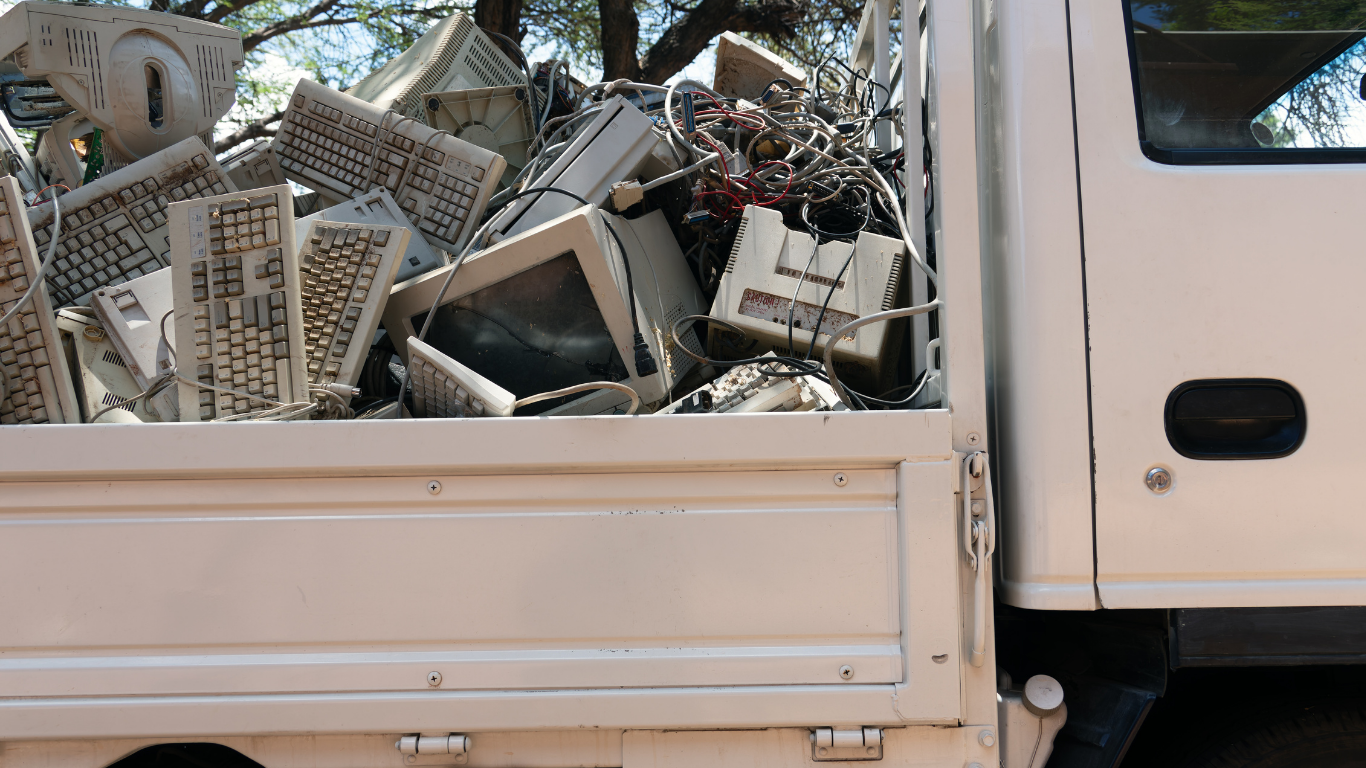
A truck full of discarded electronics

Planet, not data centers

Every five years, we throw away around 2 billion phones. Commercial AI piles on gigawatts and hectares of server halls. iors uses what already exists.

III · MESH · P2P 03 / 03
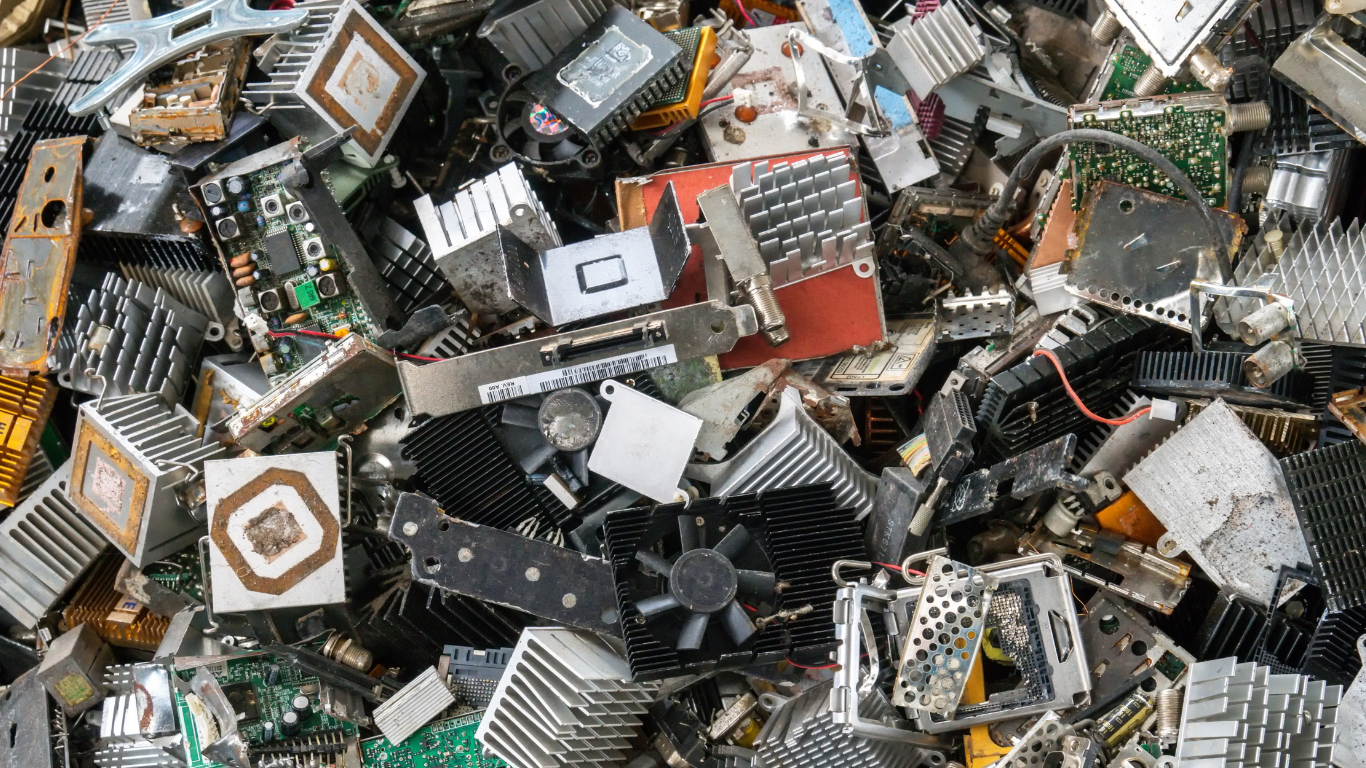
Boards, heatsinks, chips — hardware that lives on

Distributed intelligence

Different devices can take on different roles: model, retrieval, storage, routing, backup, and worker. Value emerges from the network, not from a single box.

Three movements, one infrastructure. Where they meet, AI stops being a service rented from a handful of companies.

06 / People

People and institutions
who want to own their AI.

This isn't only a Global South story. The same problem shows up at a school without reliable internet, at a foundation with sensitive data, at a clinic, a local government, a small business, and a family that doesn't want to hand its life-memory to a single platform.
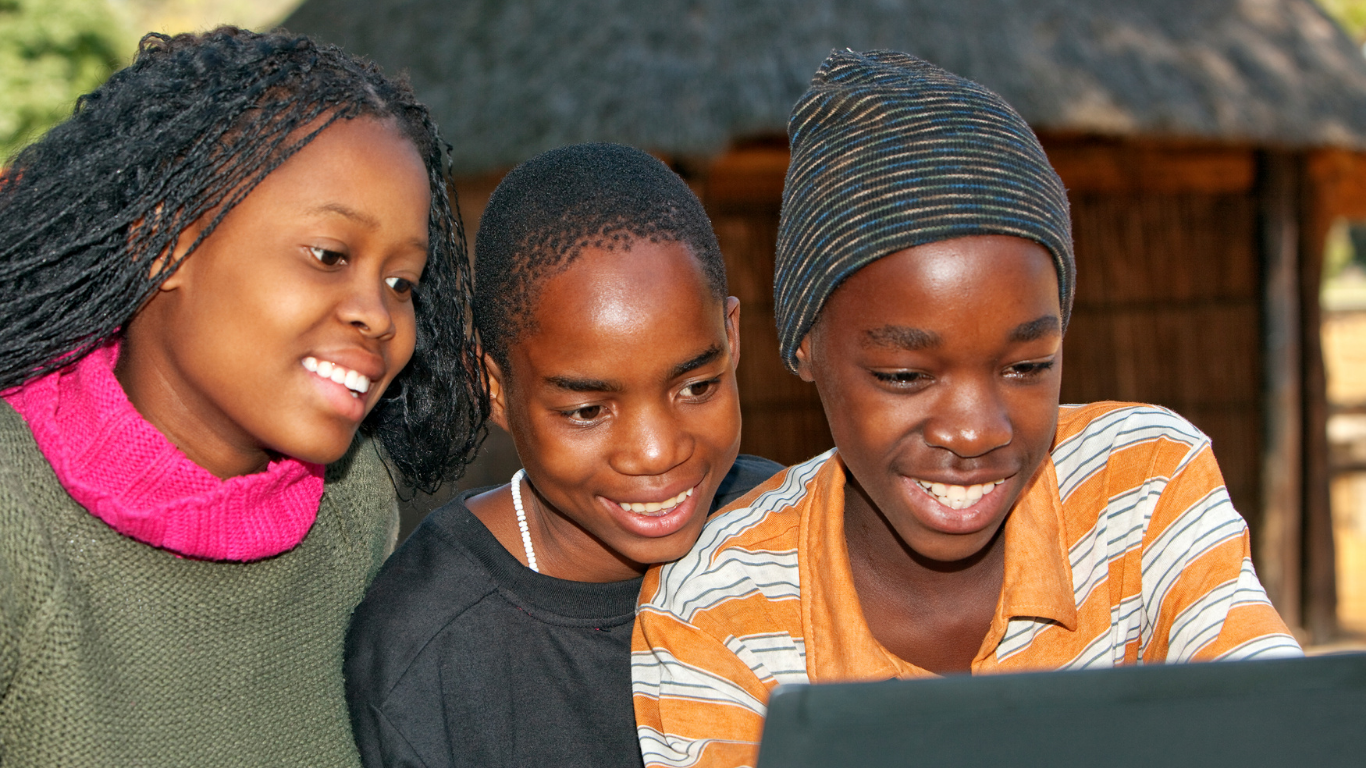

Local work and learning with phone and laptop
A school without reliable internet
local devices · shared knowledge
Teachers, students, libraries
"The model answers locally. The graph remembers the materials. The cloud is not a prerequisite for a lesson."
Students and a teacher at a laptop
NGO, clinic, local government
sensitive data · local control
Organizations that can't send everything to SaaS
"AI should help people in the field, but documents, sources, and memory stay under our control."
A small business and everyday knowledge in practice
A small business or a family
old hardware · private memory
Daily work, bills, documents, learning
"The most important assistant is the one that knows my context and doesn't turn it into someone else's database."
07 / Why now

Three curves met
at the same point.

The window is open. iors exists in order to walk through it.

A · models

Open-source crossed the local-inference threshold.

2024–2025: Llama 3-class, Mistral, and Qwen 2.5 models came within reach of consumer hardware. Workloads that just yesterday required a GPU farm now run on a phone.

B · hardware

2 billion devices waiting as infrastructure.

Around 2 billion phones cycle out every five years. Billions of working devices are discarded while they still have life left. iors turns them into a local planet of compute.

C · policy

The AI-safety conversation has matured.

EU AI Act, the Hiroshima AI Process, the UN Global Digital Compact, the AI Safety Institutes network. Regulators and societies are ready for alternatives to closed AI.

manifesto

Three curves met at the same point. The window is open. We intend to walk through it.

EU AI Act takes effect2024
US Executive Order on AI2023
G7 Hiroshima AI Process2023
UN Global Digital Compact2024–25
AI Safety Institutes network2024+
08 / For organizations

For investors, foundations,
and organizations that want to own their AI layer.

iors is the consumer surface of BGML.ai: a path to free AI for people priced out of the cloud, and a private mesh for institutions that need their own infrastructure.

three layers

People · organizations · builders

Built as the iors.ai consumer surface for the BGML.ai protocol. Open-first core, with private and institutional deployment layers.
WIKIPEDIA ARXIV OPENSTAX PROJECT GUTENBERG STACK EXCHANGE OPEN DATA OWN DOCS + PEER KNOWLEDGE